This piece is adapted from the original article which can be found here.
Triathlon is unique in the world of endurance sports. Instead of mastering one discipline, athletes must combine three: swimming, cycling, and running. Preparing for a triathlon, and the race itself, puts the body under serious stress. This includes:
- Depletion of fuel stores
- Loss of fluids and electrolytes
- Micro-damage to muscle tissue
- Inflammatory and oxidative stress responses
That’s why post-exercise nutrition is essential for triathlon performance. Yet many athletes still overlook what could be called the fourth discipline: recovery. Without proper recovery, the risk of injury rises while the benefits of training are not maximized.
The dual purpose of recovery
Recovery nutrition is not ‘one-size-fits-all’. It should be aligned with the phase and demands of the training or race program. In simple terms, the post-exercise period serves two goals:
- Restoration: Restore what was used (e.g., fluids, carbohydrates) during the first session so the body can perform well again in the next one.
- Adaptation: Support the body’s adaptation to the training stress, so it becomes stronger, faster and more efficient, ultimately improving overall triathlon performance.
The 3 Rs of recovery
A solid nutritional recovery strategy is essential for how the body adapts after each session and for arriving stronger at the start line. A simple rule of thumb is to follow the 3 Rs of recovery: Refuel, Repair, Rehydrate.
Refueling – Restoring glycogen levels
Carbohydrates are the primary fuel source during triathlon. They are stored as glycogen in muscles and liver, and long or intense training sessions can deplete these stores completely.
Refueling is a central part of a triathlete’s recovery strategy. With adequate carbohydrate availability, muscle glycogen can typically be restored within 24 hours after exercise. Effective refueling starts the moment carbohydrates are consumed, so it is important to refuel as soon as possible (within 1 hour) after exercise.
This is especially important after long and/or heavy training sessions, when the next training is less than 8 hours away, or during high-volume training blocks or intense competition schedules. Not refueling properly can delay recovery and reduce performance.
Guidelines for rapid glycogen restoration:
- Consume 1.0–1.2 g of carbohydrate per kg of body weight per hour during the first 4 hours of recovery.
Example: For a 60 kg athlete the target is 60–72 g per hour (240–288 g total over 4 hours).
After the initial recovery window, prioritize total daily carbohydrates and energy intake in line with the overall training load.
Practical tips:
A full meal immediately after exercise isn’t always practical or appealing when fatigue suppresses appetite. Liquid carbohydrates are easier to consume and absorb.
Amacx products that help you refuel:
- Amacx Recovery Shake : 30 g of carbohydrates
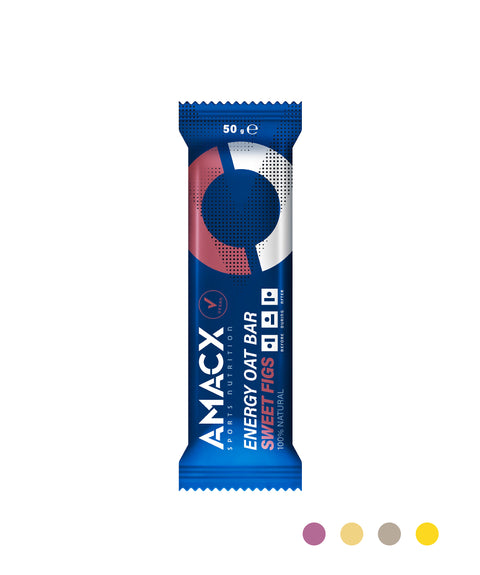
- Amacx Recovery Bar : 22 g of carbohydrates
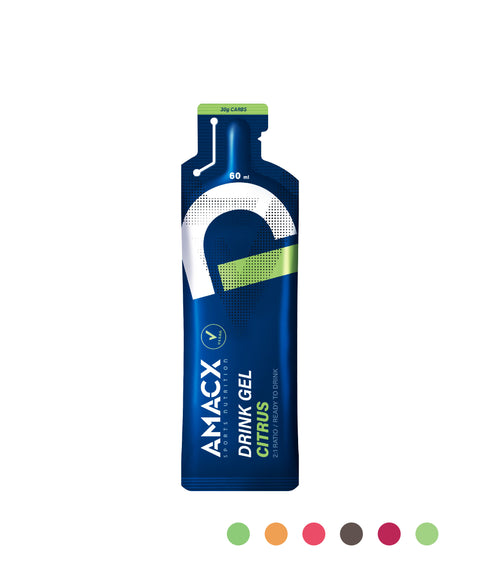
- Amacx Energy Drink : 30 g of carbohydrates
- Amacx Cherry Juice : 30 g of carbohydrates
These products deliver carbohydrates in a 2:1 glucose-to-fructose ratio to support both muscle and liver glycogen restoration. Research suggests that combining fructose with glucose may restore liver glycogen faster than glucose alone and could support improved endurance capacity in the following session.
Repair – Support muscle protein synthesis
Dietary protein is essential for effective recovery after triathlon training and racing. It provides the amino acids your body uses as ‘building blocks’ to repair damaged muscle proteins and synthesize new ones, to promote training adaptations and improve performance over time.
Key principles:
- Aim for ~0.3-0.4 g/kg of protein immediately after exercise.
Example: For a 60 kg triathlete that means 18-24 g of protein
When athletes cannot tolerate optimal carbohydrate intakes (~1.0-1.2 g/kg per hour) immediately after exercise, adding ~0.3-0.4 g/kg of protein can also help support muscle glycogen resynthesis. - A protein-rich snack before bed supports ongoing muscle repair and adaptation while you sleep.
Amacx products that help you repair:
-
Amacx Recovery Bar and Shake : Provide 20 and 22 g of protein along with carbohydrates, supporting both refueling, and muscle repair and adaptation after training.

* Repair support through anthocyanins that can help reduce exercise-induced muscle damage and soreness.
Rehydration – Replacing fluids and electrolytes lost in sweat
Many triathletes finish a training session or race in a dehydrated state because they simply cannot drink as much as they lose. This is especially common in hot conditions or during high-intensity and longer efforts. Replacing the fluids lost in sweat is an essential part of recovery. It helps restore plasma volume, supports circulation, and prepares the body for the next exercise.
Rapid rehydration becomes especially important with higher fluid losses (e.g., >2L per hour) and between two training sessions, as starting exercise well-hydrated supports optimal performance.
Key principles:
- Guidelines for rapid rehydration:
- Aim to drink ~150% of the fluid lost during exercise over the next 2–4 hours. Weigh yourself before and after exercise to estimate your loss.
Example: finishing 2 kg lighter equals ~2 L of fluid lost → target ~3 L during recovery.
Why? This helps restore fluid balance, as the body continues to lose fluid through sweat and urine. - Start early and drink small, regular amounts rather than a large volume all at once.
Why? This helps minimize gastrointestinal distress and reduces excessive urination, so more fluid is retained. - Include electrolytes to support the thirst response and improve fluid retention.
- When finishing late in the evening, limit fluid intake before bed and complete rehydration the next morning.
Why? This reduces the chance of disrupted sleep from overnight bathroom trips.
If the next session is more than 6–8 hours away, recovery meals and drinks are usually sufficient to restore fluids and electrolytes.
Amacx products that help you rehydrate:
- Amacx Hydro tabs : Dissolve an electrolyte tablet in 500-750ml water. That way you replace both fluids and electrolytes.
-
Amacx Energy Drink : It not only supports hydration but also helps replenish your fuel stores with 30 g of carbohydrates.

Cherry Juice
Acute recovery vs. long term adaptations
When building a recovery strategy, every triathlete needs to understand their primary goal:
- Is the priority to recover as quickly as possible to be optimally prepared for the next demanding training or race?
- Or is the goal to maximize training adaptations and become stronger over time?
High-intensity and prolonged exercise can cause small structural disruptions in muscle fibers, which trigger an inflammatory response, a process associated with oxidative stress. This increase in oxidative stress is not a bad thing, it’s actually an important signal that triggers your muscles to adapt to exercise and become stronger. The trade-off? Muscle soreness and fatigue.
Reducing this stress response may accelerate short-term recovery, but it can also limit the stimulus your body needs to adapt and improve over time.
Amacx Cherry Juice is developed for moments when rapid recovery takes priority over long-term adaptation, which is exactly why it should be used strategically.

When to use cherry juice for recovery
Research shows that the antioxidative and anti-inflammatory properties of tart cherries, and other fruit sources naturally rich in polyphenols/anthocyanins, help reduce muscle damage and soreness after strenuous exercise.
- Cherry Juice his therefore beneficial when rapid recovery matters most. Think about multi-day races or back-to-back race weekends. In those moments, the goal isn’t maximizing adaptation; it’s recovering as quickly as possible so you can perform again at your best.
- It also fit strategically into the taper of a training phase, the final phase before an important race. During this period, the focus shifts. Training volume decreases, and recovery and race preparation become the main priorities, so you arrive at the start line ready to perform.
When not to use cherry juice for recovery
During training periods where 'getting better and stronger' is the focus, it is advised not to take cherry juice or any other strong antioxidant. As mentioned earlier, the inflammatory reactions and muscle damage that occur are an important stimulus for long-term adaptations.
Cherry Juice key principles
- Contains 120 mg of anthocyanins, standardized in each serving.
- Naturally contains melatonin, which may help reduce the time needed to fall asleep and support sleep quality.
- Best suited to athletes whose focus is acute recovery and where training adaptations are not the primary goal.
- Informed Sport Certified.
Cherry Juice
- Provides 30 g of carbohydrates in a 2:1 ratio, supporting glycogen replenishment.
- Contains 500 ml of fluids to boost rehydration.
Recommended intake:
Take Cherry Juice once or twice daily for at least 4 to 7 days
- First dose: Immediately after training or competition
- Second dose: 1 hour before going to sleep